GUARD
Global Upskilling for Crane
and Port Operations Safety
A European partnership developing specialised training programmes to improve skills in the safe and efficient handling of port cranes — reducing accidents and creating safer workplaces across Portugal, Spain, and Belgium.
Port cranes are powerful —
training should match.
Ports are increasingly becoming industrial hubs where complex machinery is required. While occupational hazard training is mandatory, specific training on the exact handling of port cranes remains underdeveloped — posing serious risks to workers.
GUARD (Global Upskilling for Crane and Port Operations Safety) addresses this gap head-on. Framed within the European Year of Skills, it develops a specialised digital training programme for port crane operators across Portugal, Spain, and Belgium, promoting safety, digital readiness, and knowledge transfer.
of occupational accidents globally come from the maritime sector — despite less than 1% of the global workforce.
of maritime sector accidents in Spain are caused by non-existent or insufficient training procedures.
workers are killed each year during maritime activities worldwide according to FAO and ILO data.
Erasmus+ lump sum granted to develop the first transnational specialised training in port crane safety.
Project Objectives
GUARD addresses the gaps in vocational training for port crane operators through four interconnected strategic goals.
Specialised Training Programme
Develop a comprehensive curriculum covering safe port crane operation, emergency protocols, ergonomics, and maintenance — available in EN, ES, and PT.
Reduce Occupational Accidents
Target the root cause: insufficient training. GUARD aims to directly reduce the high accident rate in port crane operations across Europe.
Collaborative Network
Create a lasting network of port professionals, institutions, and organisations sharing best practices and safety knowledge.
Digital Innovation
Online learning platform and digital tools aligned with the EU Digital Education Action Plan 2021-2027.
EU Policy Alignment
GUARD is fully aligned with the European Year of Skills, the Digital Education Action Plan 2021-2027, and the EU's harmonisation efforts on crane safety legislation (EC proposal, March 2023).
Our Partners
Four complementary organisations from three countries, combining sector expertise, project management experience, and safety knowledge.
DOCAPESCA
Portugal · OID: E10365106
Docapesca Portos e Lotas S.A.
State-owned company managing the public service of the first sale of fish at auction, administration of fishing ports and recreational marinas, and port authority functions in Portugal.
FINNOVA
Belgium · OID: E10119057
FINNOVAREGIO
European Foundation based in Brussels committed to business innovation, talent development, and European funding. Expert in project management, communication, and EU institutional outreach.
Visit websiteORPAGU
Spain · OID: E10365350
Organización de Palangreros Guardeses (OR.PA.GU)
Europe's most representative surface longline fishing fleet with 80 vessels specialised in Swordfish. Manages training, social and health coverage for over 1,000 crew members.
Visit websitePROMAIOR
Portugal · OID: E10364013
Associação Pró-Maior Segurança dos Homens do Mar
Association dedicated to promoting maritime safety and reducing accidents. Experienced in implementing safety training, emergency protocols, and advocating for maritime workers' safety regulations.
Project Activities
A practical work plan structured around training design, implementation, coordination, dissemination and long-term impact.
Needs Analysis
Identify main safety needs in port crane operations through surveys, interviews with experts, and compilation of accident statistics and safety regulations across Spain, Portugal, and Belgium.
Focus
Comprehensive report with accident statistics, comparative safety regulation analysis, and identified training gaps.
Training Design
Design a specialised training programme covering safety regulations, safe crane use, emergency protocols, ergonomics and maintenance. Develop digital tools, manuals, and case studies.
Focus
Structured training curriculum, educational materials, online platform, and social media strategy.
Training Workshop
Implement the training programme through hybrid in-person and online sessions. Include practical simulations, emergency management workshops, and crane maneuvering exercises.
Focus
Trained port workers with practical crane safety knowledge, feedback surveys, and recorded sessions.
Monitoring & Implementation
Evaluate the impact of training through port visits, post-training surveys, online interviews, and performance reports. Provide technical assistance and mentoring to participants.
Focus
Impact assessment reports, measured accident reduction, and follow-up recommendations.
Advocacy, Communication & Dissemination
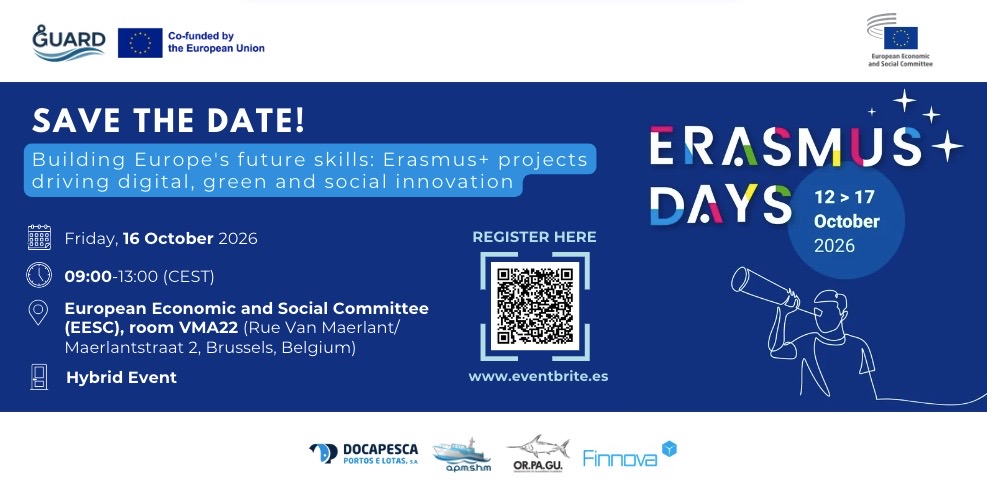
Promote project results with a public event in Brussels featuring expert panels and networking. Social media campaigns, final evaluation meeting, and distribution of results reports.
Focus
Brussels closing event, dissemination activities, broader stakeholder outreach, and new collaborations across the sector.
Project Funding
The only public figure displayed here is the overall project cost.
GUARD is co-funded by the European Union under the Erasmus+ Programme. Activity-by-activity work package costs are intentionally omitted from the public site.
Funded by the European Union under the Erasmus+ Programme · Call 2025 Round 1 · Project ID: 2025-1-PT01-KA210-VET-000364772
Project Updates
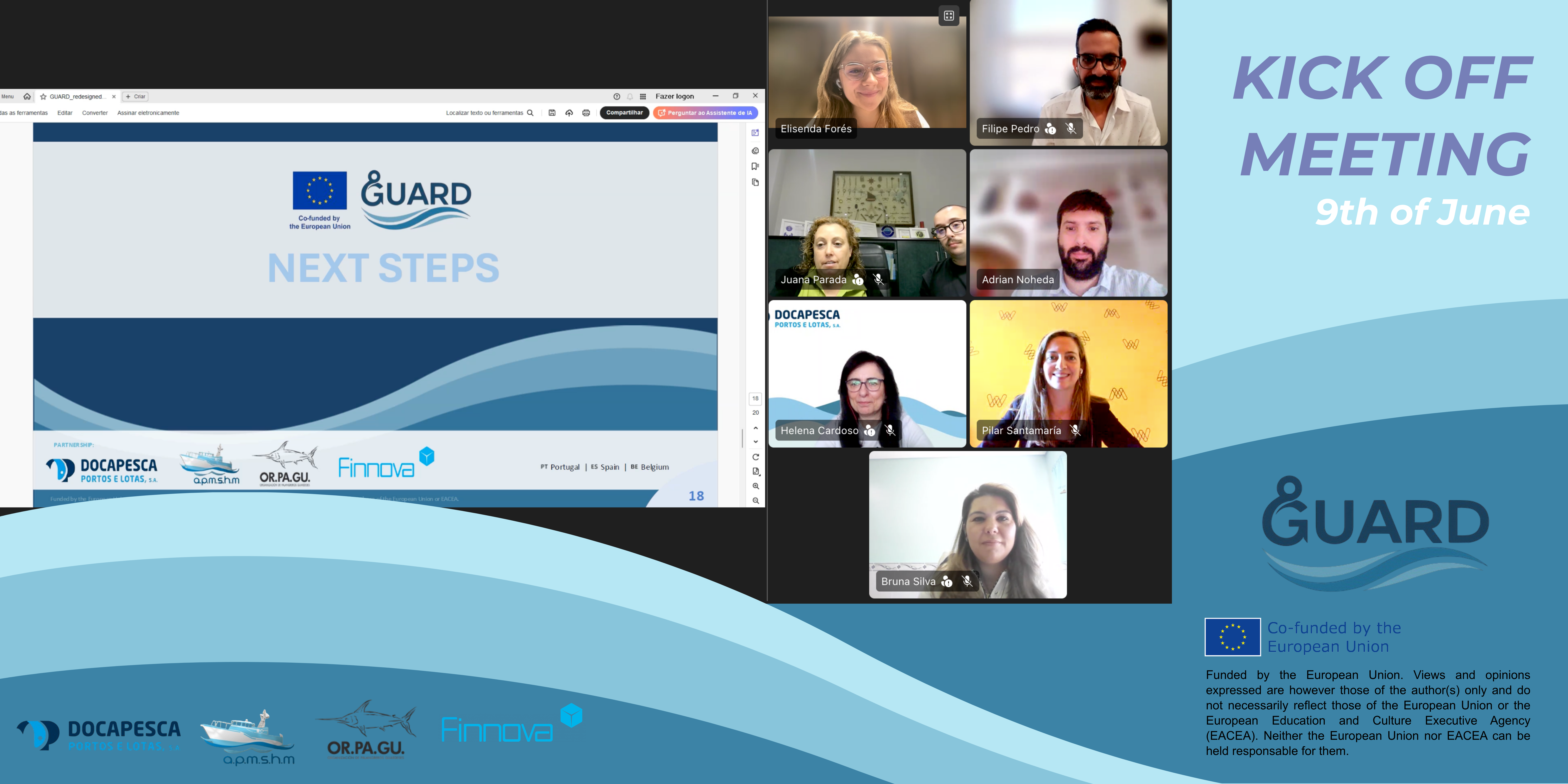
Follow the progress of GUARD — from needs analysis to the Brussels closing event.